Blog
Pepper spray and tear gas: the difference, ingredients and how to choose


Pepper spray is one of the best-known personal protection products, but customers in the shop often don't know exactly what they're buying. Some ask for "tear gas", some for "OC spray", some for "self-defence spray", and they mean the same product. Sometimes they don't.
In this guide we explain what pepper spray contains, how it works and how it differs from tear gas. Then we move on to practical matters: types (spray, gel, refill), range, number of bursts, carrying, storage and shelf life.
This text is for information only. It contains no instructions for making or misusing anything. Any use must be lawful, responsible and in line with the manufacturer's instructions.
Pepper spray and tear gas: what they are and how they differ
What pepper spray (OC spray) is and how it works
Pepper spray, also known as OC spray (Oleoresin Capsicum), contains active components derived from hot peppers. On contact with mucous membranes it causes intense stinging, watering eyes and irritation of the airways.
Its purpose isn't to hurt anyone, but to make it harder for an attacker to continue and give you a chance to get away from a dangerous situation. So think of it as a means of retreat, not confrontation. In practice it is also called self-defence spray, personal protection spray or defence spray.
What tear gas is and why the terms get mixed up
Tear gas is a general term for chemical irritants, most often in aerosol form, that cause watering, stinging and discomfort in the eyes and airways. In everyday speech people call all such sprays "tear gas", although this can cover different formulations.
That is why manufacturers and sellers often use both names together, for example "pepper spray (tear gas)". This makes searching easier, but it does not mean every tear gas spray is the same as OC spray.
Pepper spray vs tear gas: a comparison
- Active substance: pepper spray is based on capsaicinoids from hot peppers (capsaicin and related substances). Tear gas is a broader term and can also refer to other chemical irritants.
- Use of the names: "pepper spray" and "OC spray" are more precise. "Tear gas" is used colloquially for several types of irritant sprays.
- Effect: both cause watering eyes and irritation, but the intensity and sensation depend on the formulation.
- Legal status: rules on buying and carrying may differ from country to country and from one type of product to another.
Pepper spray is often chosen for personal protection precisely because of its recognisable "peppery" effect. When buying, look at the specification, not just the name on the packaging.
Pepper spray composition: OC, capsaicinoids, carrier and propellant
Formulations vary between manufacturers, but pepper spray most often contains these groups of ingredients:
- Oleoresin Capsicum (OC): an extract of hot peppers containing capsaicinoids.
- Capsaicinoids (e.g. capsaicin): the active substances responsible for stinging and irritation.
- Carrier or solvent: helps disperse the active substances evenly, depending on the formulation.
- Propellant: the gas or pressure that expels the contents from the canister.
- Stabilisers: contribute to the stability and consistency of the product.
It's important for buyers to understand that the effect doesn't depend only on the amount of OC extract, but also on how the contents are released. The same active ingredient can come as a spray or a gel, which changes how it's used.
Types and how to choose a pepper spray
Spray, gel and refill
Classic spray releases the contents as a stream or cloud. It is the most widespread and easiest to understand.
Pepper gel has a thicker formula that is applied more precisely. Gel disperses less in the air, so there is less chance of the contents affecting you or people around you, for example indoors or in the wind.
Refill used to replace a used or expired spray. Some models can also be used as a standalone spray, so they aren't just a spare part.
Range, number of bursts, size and how to carry it
- Range: shows the distance at which the spray is still effective. A greater range means you do not have to be close to the person you are defending yourself against. Compact models in our range have a range of up to 3 m.
- Number of activations: tells you how many short presses the canister can deliver. Some models offer 25 bursts, which is enough for several short bursts in one situation.
- Size: a smaller spray is easier to carry every day, and a spray left at home doesn't help at all.
- How to carry: a clip, a keyring or a bag pocket. Choose what you will actually carry and can reach quickly.
Experience from the shop: people often buy a spray, throw it to the bottom of their bag and forget about it. If you carry it in a bag, give it a fixed compartment. If you're still choosing a pouch for everyday carry, see our article how to choose a men's bag, as the pocket layout matters a lot here.
Before you need it, read the instructions and learn how to remove the safety catch on your model. Don't do this by spraying indoors or towards other people.
Is pepper spray legal in Serbia: what to check
Regulations on buying and carrying self-defence products vary from country to country and may change. Before buying and carrying, check the current laws, especially if you are travelling abroad.
- Whether there are age restrictions on purchase.
- Whether there is a limit on volume or type of product.
- How the spray may be carried and in which places it is not allowed (for example, airports and aircraft have their own rules).
- What the specification of the product you are buying says.
Use is justified only when defending yourself from an attack. Don't use the spray as a joke, to intimidate or in an argument. The consequences can be both medical and legal.
Storage, shelf life and accidental exposure
Storage and shelf life
Pepper spray is a pressurised canister, so keep it away from heat sources and don't leave it in the car in the summer sun. Keep it out of the reach of children, and take this seriously.
Every canister shows an expiry date. After that date, pressure and spray consistency are no longer guaranteed. Replace the spray when it expires, after every use and if the casing is damaged or the safety catch does not work properly. Refills are available for this.
What to do if you're accidentally exposed to pepper spray
- Get into fresh air and move away from where the spray was used.
- Don't rub your eyes, it only spreads the irritant.
- Rinse your eyes and face thoroughly with cold water. If you wear contact lenses, remove them.
- Wash your skin with mild soap and water, and change your clothes.
- If breathing or vision problems don't go away, see a doctor.
A brief history: from pepper powder to modern OC spray
The idea of temporarily incapacitating an opponent with hot substances is not new. Various cultures mention ground hot peppers and similar powdered irritants used to cause disorientation and watering eyes.
In the 20th century, interest grew in "less-lethal" means for control and self-defence, so various formulations of irritant agents were researched. Over time, oleoresin capsicum emerged as the recognised active ingredient of pepper spray.
In the late decades of the 20th century, aerosol pepper spray became widely known, first through official use and then in a civilian context, with different rules by country. Today products differ in specifications and purpose, but the same still applies: legally, responsibly and stored properly.
Sabre Red pepper sprays at Army Shop
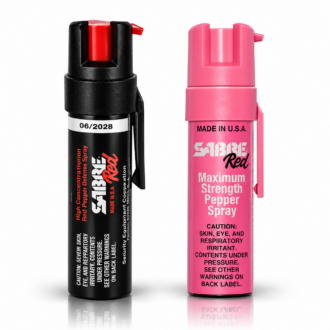
In the category pepper sprays and tear gas we currently have several Sabre Red models. They differ mainly in how they are carried and in their formula.
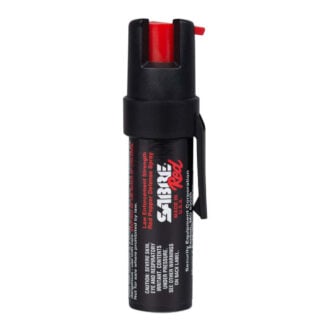
Self-defence Pepper Spray with Clip is a compact spray with a robust casing. It clips onto clothing or gear so it's always to hand, and it's designed for quick use in the city all year round.
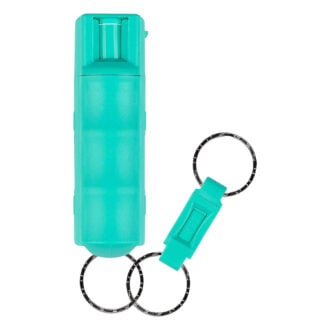
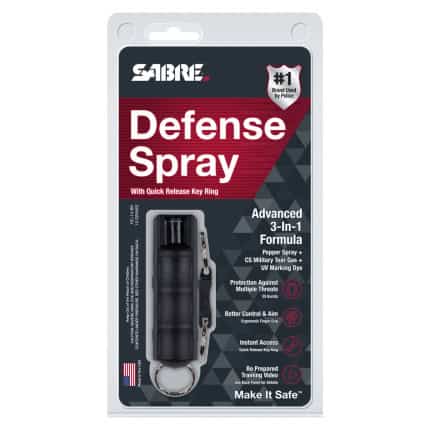
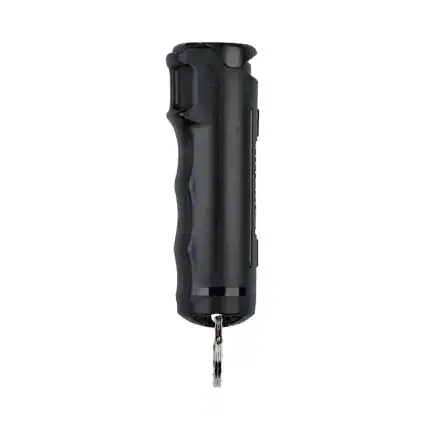
Quick Release Pepper Spray has a light ergonomic casing and a keyring with a quick release mechanism, so you can carry it on your keys and detach it quickly. The range is up to 3 m, with at least 25 bursts.
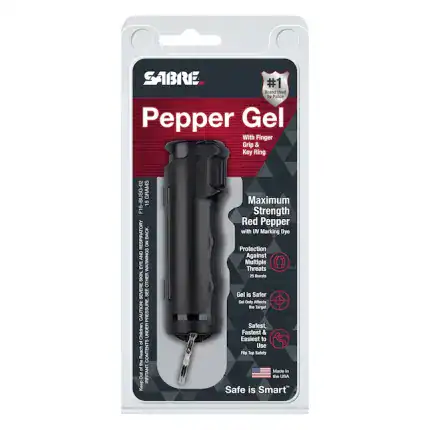
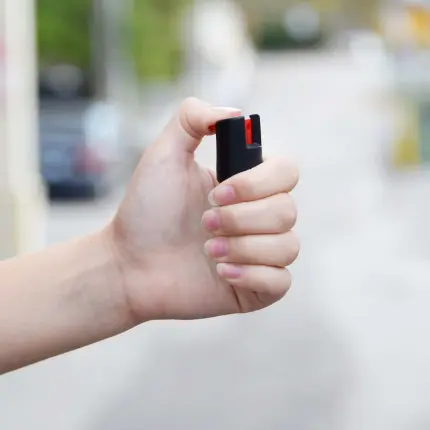
Self-defence Pepper Gel has a gel formula for precise application and a compact design. It's suitable for carrying in a bag or on a belt.
Sabre Refill serves as a refill for another spray, but can also be used on its own. The range is up to 3 m, the capacity is 25 bursts, and the product description states that it is legal to carry.
Along with the spray, you can also browse other gear for everyday carry and time outdoors.
You can see and handle the models in our shops in Belgrade, Novi Sad and Niš; the addresses are on the page our shops. If it's easier, order online and the parcel arrives by D Express courier throughout Serbia (details on delivery).
Note: this content is for information only and does not constitute legal advice. Regulations may change, so check the current laws before buying and carrying.
From our range
 Black
Self-Defence Pepper Spray (Tear Gas) with Clip
 Black
Self-Defence Pepper Spray (Tear Gas), Quick Release
 Black
Self-Defence Pepper Gel (Tear Gas)
FAQs
Is pepper spray the same as tear gas?
Not always. Pepper spray refers to OC spray based on hot pepper extract, while tear gas is a broader name for various irritant sprays. Both cause watering eyes and irritation, but the formulations differ.
What does OC spray mean?
OC stands for Oleoresin Capsicum, an extract of hot chilli peppers containing capsaicinoids, such as capsaicin. These substances cause a characteristic stinging and irritation.
Should I get pepper spray or pepper gel?
Spray is the classic choice and the easiest to use. Gel has a thicker formula for more precise application and disperses less in the air. Decide based on where you will carry it and how you find it easier to use.
How long does pepper spray last?
The expiry date is printed on the canister. After it expires, after use or if the casing is damaged, the spray should be replaced. You can use a refill for this.
Is pepper spray legal?
Rules differ between countries and may change. Before buying and carrying, check the current regulations, especially age restrictions, permitted volume and places where carrying is not allowed.



















 Patches
 Dog tags
 Balaclavas and neck gaiters
 Belts, braces and duty belts
 Hats, caps and wide-brim hats
 Scarves
 Sunglasses
 Wallets
 Gloves
 Zippo Lighters and Zippo Accessories
 Jackets
 Trousers
 Sweatshirts
 T-shirts
 Shirts
 Shorts
 Windbreakers
 Vests
 Boots
 Shoes
 Trainers
 Footwear accessories
 Backpacks
 Bags
 Pouches
 Torches
 Pepper Sprays and Tear Gas
 Binoculars and compasses
 Knives, tools and batons
 Slingshots
 Other gear